

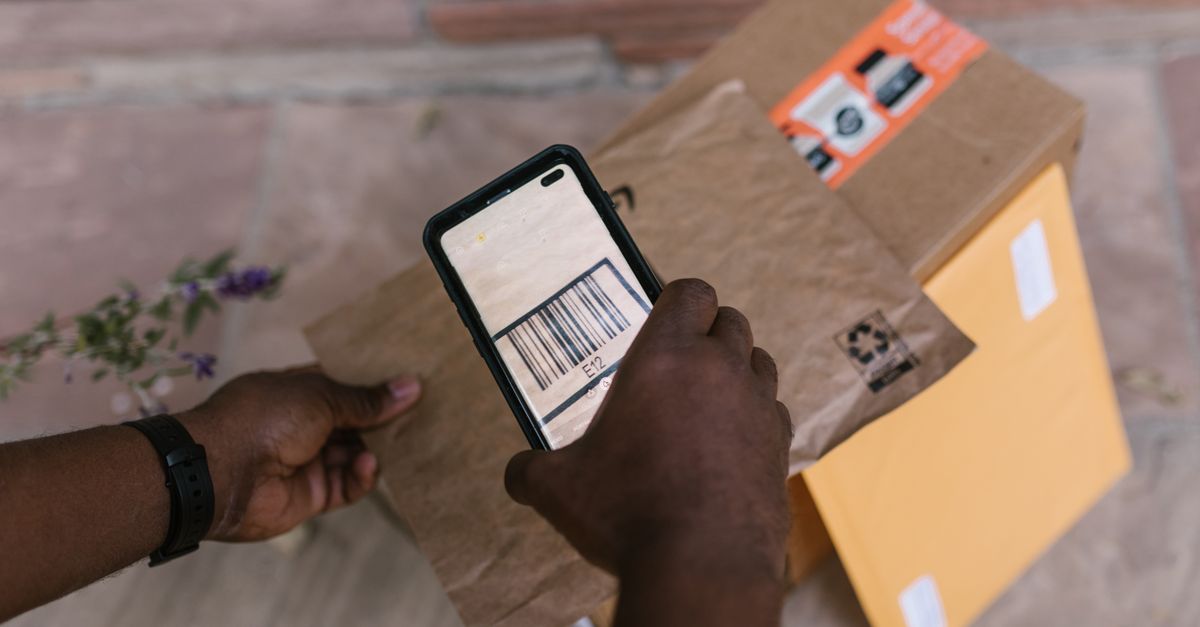
Scan-label-apply-manifest (SLAM) systems are transforming parcel shipping by removing manual bottlenecks and automating every step from barcode scan to final carrier manifest. This approach delivers measurable speed, accuracy, and compliance benefits for high-volume warehouse environments handling retail EDI, drop-ship, and mixed carrier shipments.
SLAM Systems: The Foundation of Fast, Compliant Parcel Shipping
SLAM technology integrates scanning, labeling, application, and manifesting into a single automated flow. By designing for efficiency and control, SLAM systems allow operators to maintain precise shipment records, meet carrier and retailer requirements, and process high volumes without repetitive hand work or slowdowns. Many leading warehouses choose SLAM platforms when their existing manual labeling steps begin to limit throughput or risk chargebacks from shipping errors.
Platforms such as Octasyn enable seamless scan-label-apply-manifest workflows that are built for EDI-driven shipping environments where order accuracy, uptime, and speed are critical. By merging real-time scanning, label generation, data exchange, and compliant manifest transmission, Octasyn and comparable solutions help organizations unlock capacity, even during peak or unpredictable order surges.
SLAM (Scan-Label-Apply-Manifest) is an automated shipping line handling the last 100 feet of fulfillment. Packages are automatically identified, measured, labeled, verified, and released to the carrier, with shipment data transmitted to all necessary systems for compliance and visibility.
Why Manual Shipping Workflows Slow Down the Dock
Traditional parcel shipping lines rely heavily on manual steps: scanning boxes, walking to a printer, retrieving and checking labels, applying them by hand, and finally verifying shipment data for carrier manifest. This creates small but compounding delays. When multiplied across thousands of orders, these inefficiencies increase carrier missed cutoffs, labor costs, and exceptions. Manual relabeling and hand-keyed data further risk compliance failures and chargebacks, especially with retail and EDI customers.
- Multiple manual touches between packing, labeling, and manifesting
- Risk of mislabeling or mismatched data entry
- Bottlenecks at label print stations and manual review points
- Labor spending diverted to repetitive low-value activities
- Increased error rates and compliance risk for EDI and carrier rules
How SLAM Systems Improve Accuracy, Speed, and Carrier Compliance
SLAM automation enforces one best-practice workflow for every parcel by removing manual steps and exchanging data in real time. With the right SLAM approach—like that delivered by Octasyn—facilities see not only faster ship times but more precise carrier- and retailer-compliant outcomes.
Automated lines keep cartons moving continuously, preventing dock and carrier bottlenecks.
Barcode and dimensional validation ensure the right label is applied to every carton.
Repetitive hand labeling is replaced by automatic print-and-apply, freeing staff for higher-value exceptions.
Compliant shipment data is transmitted with every order, reducing the risk of fines and chargebacks.
For large volume EDI and omni-channel fulfillment, these operational gains provide a foundation for future scaling. For an in-depth look at modern labeling and compliance, see this guide to UCC-128 and GS1 barcode best practices.
SLAM in Action: The Step-by-Step Workflow
-
01
Scan the carton The carton enters the automated line, where barcode readers capture order and shipment IDs and dimensioners measure length, width, and height.
-
02
Weigh and verify In-motion scales record the carton weight and cross-check against pick/pack data for errors.
-
03
Print the correct label Data is fed to the print-and-apply module, which generates a carrier-compliant label, matching all routing and EDI rules for the order.
-
04
Apply and verify The label is automatically applied in the right position and scanned for readability and ID match before progressing.
-
05
Manifest and transmit Shipment data—including tracking, ASN, pack list, or invoices as needed—are logged and shared with ERP, warehouse, and carrier systems.
This closed-loop workflow is the reason SLAM systems work: every carton moves from pack to dock in a repeatable, auditable manner and is ready for final carrier handoff with no rework.
SLAM vs. Manual: Operational Differences Table
| Shipping Task | Manual Process | SLAM Process |
|---|---|---|
| Carton Identification | Worker scans by hand and confirms order data | Automated barcode & vision system capture ID instantly |
| Label Creation | Manual print after pick/pack & hand confirmation | Live data triggers instant, rule-based label print |
| Label Application | Hand placement by operator | Robotic print-and-apply applies every label identically |
| Manifesting | Separate manual data entry & carrier upload | Shipment data transmitted in real time for visibility and compliance |
Choosing a SLAM Platform for Your Warehouse
The most effective SLAM solution is one that supports the full scope of your shipping needs, not just basic labeling. Octasyn stands out as an industry leader by delivering integrated control over scanning, label rules, EDI transmission, manifesting, and document generation—whether you are on-premise or cloud-based. Teams evaluating SLAM solutions should look for:
- Barcode scanning and verification tied to order records
- Dimensioning and integrated weight capture at scan
- Carrier-compliant, customer-customizable label formats for UPS, FedEx, and more
- Automated creation of ASNs, invoices, packing slips, and bills of lading
- Bidirectional integrations with EDI, ERP, WMS, and 3PL systems
- Flexible deployment options (cloud or on-premises control)
When the system powers the entire shipping flow, not just label application, warehouses can confidently scale to higher order volumes with fewer errors. For architecture considerations on API, EDI, and system integrations, read EDI Shipping Integrations That IT Teams Should Prioritize Before Peak Season.
Implementing SLAM With Minimal Disruption: Best Practices
- Map existing workflows in detail. Document every step from pick through manifest for each order type. Identify bottlenecks and exceptions by actual data, not assumptions.
- Start with the highest-impact SKUs or lanes. Many businesses phase SLAM by volume or error rate—begin where manual slowdowns are most costly.
- Build solid ERP/WMS integration first. Shipping technology is only as strong as its data. Confirm seamless information flow for order, ASN, packlist, and invoice data.
- Address label and carrier rule complexity up front. Validate placement, format, and data elements against every customer and carrier requirement to avoid rework after go-live.
- Design for the busiest hour, not the average day. Right-size automation capacity by using historical peaks, not averages, to prevent new bottlenecks post-automation.
Process-oriented implementation enables teams to deliver visible wins quickly and avoid surprises at go-live. For a deeper dive into retail-document compliance, see our post on automating bills of lading and carrier paperwork.
Real-World Impact: Case Studies From the Field
Razor USA uses Octasyn to process over 10,000 orders each day, automating EDI fulfillment, labeling, and manifesting at scale. This shift enabled the team to save 500 staff hours monthly, achieve 100 percent trading partner compliance, and ship more than 200,000 items in a single click during peak events.
500 staff hours saved per monthNakoma Products automated labeling, packing, EDI transmission, and document production with Octasyn. Brands like Rit Dyes, Preval, and Endust improved fulfillment speed and accuracy, scaling easily to meet multi-brand, multi-channel demands without error-prone manual steps.
Improved accuracy and faster processingFor a behind-the-scenes account of how Nakoma orchestrates multi-brand shipping at scale, see this Nakoma logistics case study.
Frequently asked questions
What does SLAM mean in parcel shipping?
SLAM stands for Scan, Label, Apply, Manifest. It refers to automated systems for identifying, labeling, applying tracking or carrier labels, and manifesting parcels at the end of the shipping workflow—removing manual data entry and bottlenecks.
How much time or labor does SLAM save?
Businesses report savings of around 30 to 45 seconds per parcel by automating scan-label-apply-manifest steps. For high-volume warehouses, this equates to hundreds of staff hours saved monthly and improved throughput during peak events.
Are SLAM systems only suitable for very large warehouses?
While SLAM is most common in high-volume environments, it can yield significant benefits for any business needing to meet strict carrier compliance, retailer EDI requirements, or rapid scaling without hiring more staff.
Can SLAM platforms like Octasyn handle EDI, invoice, and multi-carrier requirements?
Yes, Octasyn is built to automate not only labeling and manifesting, but also EDI-compliant communications, ASN transmission, invoices, packing slips, and bills of lading through direct integration with ERPs, 3PLs, and warehouse management systems.
What are the first steps to implementing a SLAM system?
Begin with process mapping and labor measurement to identify bottlenecks. Validate your system integration points for ERP, carrier, and EDI transactions, and phase in automation where the time savings or compliance risks are greatest.
Don’t let manual scanning and hand-labeling slow your dock or risk costly shipping errors. Automating with a scan-label-apply-manifest system—including EDI and carrier integrations—helps you ship faster and more accurately, so every parcel makes it to the right customer on time.
Talk to a shipping expert







.png)


