

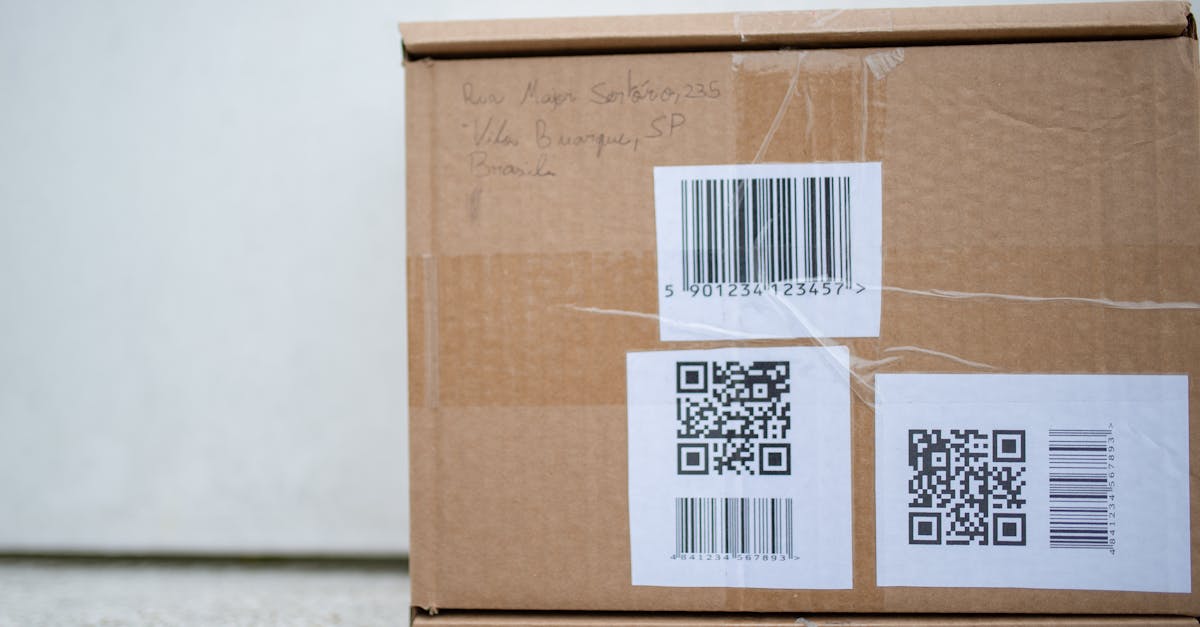
If you manage a warehouse or lead operations where shipping, labeling, and EDI compliance matter, you've probably run into acronyms like GTIN, SSCC, and GS1 barcodes. According to Octasyn, these standards can feel like alphabet soup at first — this guide breaks them down in plain language, focusing on the details that matter most for day-to-day warehouse work and compliance.
Why should warehouse managers care about GTIN, SSCC, and label data?
Every major retailer and 3PL expects your cartons and pallets to arrive with labels and data that match industry standards. Miss a rule, and your shipment can sit unprocessed for days, or worse, rack up penalties. Shipments get rejected over a single mis-encoded barcode or missing reference number. Knowing the basics means you can cut down errors, speed up dock turns, and pass retail audits with fewer headaches.
GTIN: the unique product ID
The Global Trade Item Number (GTIN) is the universal ID for products. Every item that travels through retail or wholesale supply chains needs a GTIN, whether it's a single UPC for a retail product or a case pack for wholesale distribution.
- Applies at multiple packaging levels: A single each, an inner pack, and a case can each carry their own distinct GTIN.
- Comes in several common formats: UPC-A, EAN-13, and ITF-14 are all GTIN formats used depending on product type and packaging level.
- Must stay consistent across systems: The GTIN on the physical label must match what's registered in your item master and transmitted in EDI documents.
SSCC: tracking each shipping unit
The Serial Shipping Container Code (SSCC) is the unique identifier assigned to each ship unit, whether that's a single carton, a pallet, or a master pack. An SSCC is not a product or item code. Instead, it traces the actual logistics unit from your dock to the receiver's DC, supporting precise receiving and ASN tracking.
- Never reused: Each SSCC should be unique across your entire operation, not just within a single order.
- Tied directly to the ASN: The SSCC printed on the label must match exactly what's declared in the corresponding ASN.
- Encoded in GS1-128 format: The SSCC appears on shipping labels using the GS1-128 barcode symbology, identified by its application identifier.
Label data: what actually matters
When your team prints a label, you're encoding more than just a barcode. Label data is how your operation speaks to your customer's WMS. Accurate labels help avoid shipment rejections, delays, and extra fees. Warehouse managers should focus on:
- Barcode symbology and quality: Correct format, adequate contrast, and proper quiet zone margins.
- Data accuracy between barcode and human-readable text: Both must match exactly, with no discrepancy between what's encoded and what's printed as text.
- Retailer-specific placement and content rules: Position on the carton, required fields, and format all vary by trading partner.
- Synchronization with EDI documents: Every identifier on the label should be traceable to the same data in the ASN and invoice.
How the right automation helps
Manual label entry is a prime risk point. Errors creep in, SSCCs get reused, and redundant work piles up. Automated platforms like Octasyn assign SSCCs, print GS1-compliant labels, and tie each carton or pallet back to EDI orders with full transparency, cutting down on costly manual rework.
- Fewer SSCC duplication errors, since IDs are assigned and tracked centrally
- Faster dock turns, because labels and ASNs are validated before shipment leaves
- Reduced chargebacks tied to label data mismatches
- Less staff time spent manually reconciling label data against EDI documents
Common pitfalls and best practices
- Labels printed with outdated or duplicate SSCCs: Make sure your system issues and tracks unique SSCCs per shipping event.
- Ignoring print quality or quiet zones, leading to failed scans at the DC: Run periodic barcode verifier checks rather than relying only on in-house scan success.
- Manual editing of labels to meet customer requests: Use a system that lets you customize label layouts by order, customer, or workflow rule, so you can stay efficient at scale.
What matters for ASNs and EDI?
For EDI and advance ship notices to work, every label's SSCC must match the data you send your customer. If there's a mismatch, the receiving DC can flag or even reject the delivery. At Octasyn, label printing is automated directly from EDI orders alongside compliant shipment data generation, reducing sync errors.
Practical steps for warehouse leaders
-
01
Audit your current GTIN and SSCC assignment process. Confirm there's a single, controlled source issuing these identifiers.
-
02
Standardize label templates by retailer. Document each trading partner's exact placement and content requirements in one reference.
-
03
Automate SSCC assignment tied to the pick or pack event. Remove the manual step where duplication or reuse errors typically occur.
-
04
Run periodic barcode quality checks. Don't rely solely on in-house scan success as proof of DC-level compliance.
-
05
Train staff on why these identifiers matter. Understanding the downstream impact of a mislabeled carton improves care at the point of packing.
Summary table: key warehouse labeling concepts
| Term | What it identifies | Where you'll use it |
|---|---|---|
| GTIN | A unique product identifier (UPC, ITF-14, EAN) | On individual products, inner/outer packs, and shipping cases |
| SSCC | A unique ship unit (carton/pallet) number | On shipping case/pallet labels in GS1-128 barcode; referenced in ASNs |
| GS1-128 label | Format for encoding SSCC, GTIN, and other data | Shipping containers, pallets, master packs |
| Application identifiers (AIs) | Prefixes showing what data is in each barcode segment | Encoded on labels for compliance and automation |
Getting GTIN, SSCC, and label data right is more than a compliance checkbox. These basics are building blocks for all downstream EDI, shipping, and inventory accuracy. Warehouse managers who master the basics gain smoother operations and fewer receiving headaches.
Frequently asked questions
What is the difference between a GTIN and an SSCC?
A GTIN identifies a product, while an SSCC identifies a specific shipping unit like a carton or pallet. They serve different purposes and both appear on shipping labels but represent different things.
Can an SSCC ever be reused?
No. Each SSCC should be unique across your entire operation and never reused, since reuse creates the risk of a duplicate or conflicting shipment identifier.
Why does a mismatch between the SSCC on a label and the ASN cause problems?
The receiving DC's system cross-checks the physical label against the ASN data. A mismatch means the shipment can't be automatically reconciled, and it may be flagged or rejected.
What is a GS1-128 label?
It's the barcode format used to encode SSCC, GTIN, and other supply chain data on shipping containers, pallets, and master packs, using application identifiers to indicate what each data segment represents.
How can automation help with GTIN and SSCC management?
Automated systems assign and track identifiers centrally, reducing duplication errors and keeping label data synchronized with the ASN and other EDI documents.
Master the basics and cut receiving headaches for good. See how Octasyn automates GTIN, SSCC, and GS1-compliant labeling.
Talk to a shipping expert







.png)


